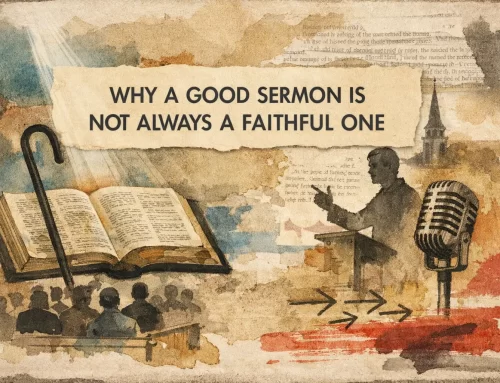
Quoting Scripture Is Not the Same as Teaching Scripture
There is an assumption that goes unnoticed through most of our churches, and I think it does real damage to the way we hear and handle the Bible. The assumption is this: if someone uses a lot of Scripture, they must be teaching it faithfully. If the verses are plentiful, if the language is thick with biblical vocabulary and the delivery is confident and earnest, then surely the Word of God is being rightly proclaimed.
I understand why that assumption feels safe. It is not irrational. A pastor who fills his sermons with Scripture references seems more anchored than one who fills them with self-help philosophy and borrowed wisdom from popular culture. A teacher who opens the Bible and reads from it, who reasons from the text and invokes its authority, seems more trustworthy than one who barely references Scripture at all. The instinct to associate Bible-heavy speech with faithful teaching is born of something right: the conviction that the Bible should govern what is taught.
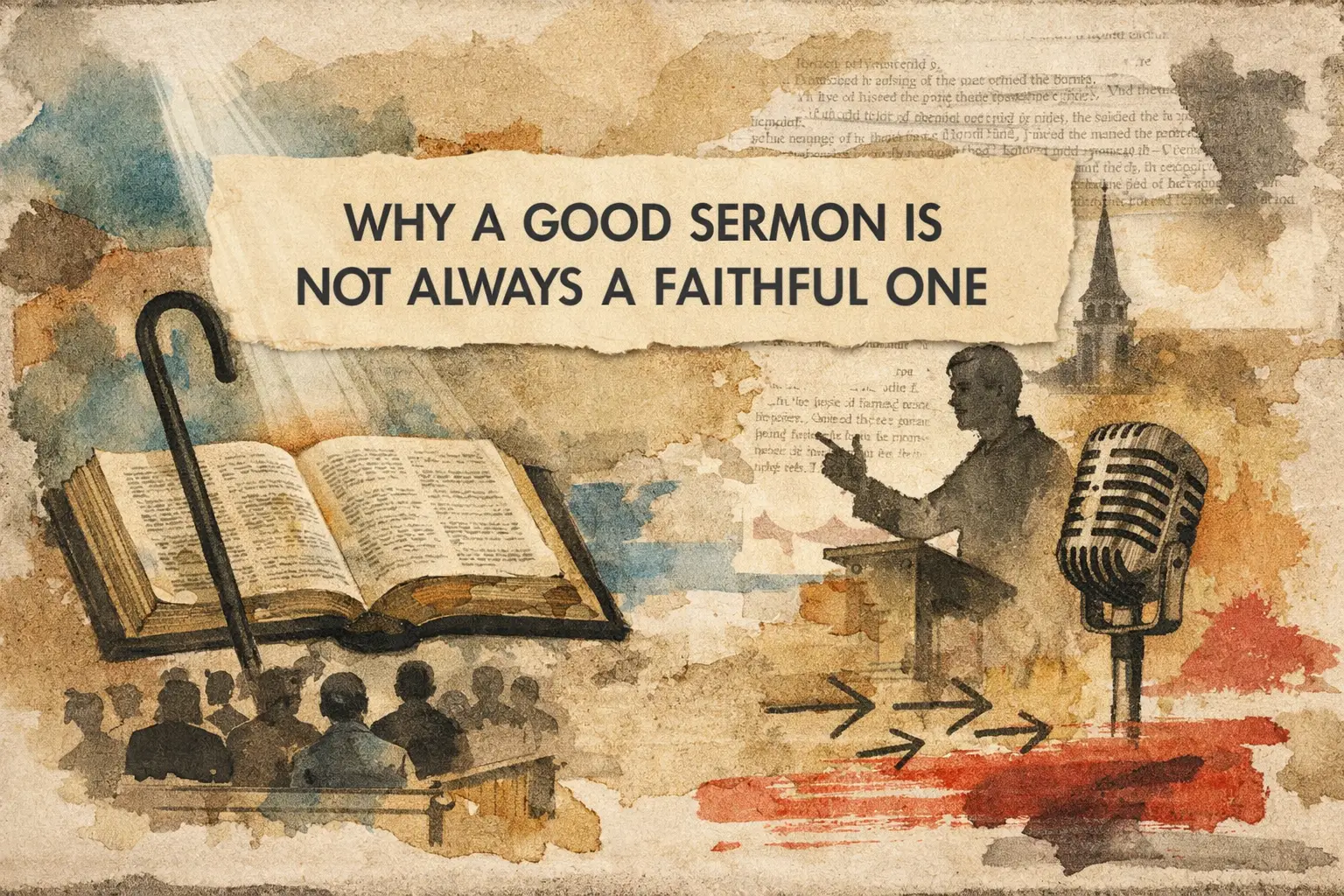
But quoting Scripture and teaching Scripture are not the same thing. The difference between them is not small, and I think the health of our churches depends, at least in part, on understanding it.
What Quoting Scripture Can and Cannot Do
A pastor can quote dozens of Bible verses in a single message and still fail to teach a single one of them. He can read a passage aloud, announce its reference, gesture toward its words, and then spend the next twenty minutes saying something the passage never actually says. He can use biblical phrases as shorthand, lift verses from their contexts to serve as evidence for conclusions he arrived at before he opened the text, and arrange Scripture around his message the way a decorator arranges furniture: for effect, for atmosphere, to give the room a certain feeling.
This is what I would call using Scripture decoratively. The Bible is present, but it is not governing. The verses appear, but they are not being explained or followed or honestly submitted to. They are being conscripted into a message that was already decided, already shaped by the teacher’s instincts or preferences or the particular cultural pressure he is responding to.
The unsettling thing about decorative use of Scripture is that it can look remarkably like faithful exposition. The man who does it may genuinely believe he is handling Scripture carefully. He has referenced it. He has spoken its language. He has felt the power of its words and borrowed that power for his message. But power borrowed is not the same as authority submitted to. The Bible does not become the governing authority of a message simply by appearing in it.
I want to be careful here. I am not describing something obviously malicious or reckless. I am describing something far more common and far more honest than that. It is the instinct, which every teacher knows if he is paying attention, to reach for a verse that sounds like it supports what we already planned to say. It is the habit of choosing familiar, emotionally resonant passages because they will land well, rather than because they actually address the matter at hand. It is the slow drift toward treating the Bible as a reservoir of quotable spiritual truths rather than as a unified, purposeful revelation that has to be read carefully and on its own terms.
What the Text Actually Requires
When God gave us Scripture, He did not give us a collection of spiritual aphorisms arranged for easy retrieval. He gave us inspired words in inspired contexts: letters written to specific churches wrestling with real and costly problems, histories that trace the long and difficult story of His covenant people, poetry and prophecy and wisdom literature and apocalyptic vision, and Gospels that present the life, death, and resurrection of Jesus Christ with theological purpose and narrative craft. Every word of Scripture was placed somewhere. It arrived in a particular literary setting, carried a particular argument, and served a particular aim in the mind of the human author guided by the Spirit.
This matters because context is not a hermeneutical nicety invented by seminary professors. Context is the shape that God chose to give His Word. To read a verse as though it were a self-contained unit, detachable from the argument around it and deployable wherever it sounds relevant, is to treat Scripture as something other than what it actually is. It is not a serious mistake in the academic sense. It is a failure to take seriously how God communicated.
The teacher’s first task, then, is not to find what a verse can be made to mean but to discover what it actually means in the place where God put it. What was the original author trying to say? What was he responding to? What was the burden he was carrying as he wrote? How does this passage fit within the larger argument of the letter or the book it belongs to? How does that book fit within the whole of Scripture? These questions are not exotic or overly technical. They are the basic questions of any reader who wants to understand what he is reading rather than simply use it.
And they cannot be answered quickly. They require patience, which is a virtue that does not come naturally to teachers who feel the pressure to produce something fresh and immediately applicable every week. They require a willingness to be surprised by the text, to arrive with an expectation and have it corrected, to sit with a passage long enough to hear what it is actually saying rather than what you assumed it would say. I have had the experience, more than once, of preparing to teach a passage I thought I understood well, only to find midway through study that the text was making a point I had not planned on making. That kind of surprise is not a problem with the text. It is the text doing what the text is supposed to do.
The Temptation That Waits for Every Teacher
Every teacher of Scripture faces a particular temptation, and I do not think we are honest enough about it. The temptation is to use the text rather than serve it. It is the pull toward deciding, before we have done the hard work of careful study, what we want to say, and then going to Scripture to find the language and authority to say it well. The result can be sincere. It can be moving and earnest and full of genuine love for the people in the room. It can be laced with biblical language and reinforced with multiple passages. And it can still be, at its core, the teacher’s own thinking dressed in scriptural clothing.
The pressure that creates this temptation is worth naming. Teachers stand before congregations that have come with real needs, real sorrows, real questions. There are things people want to hear. There are problems they are waiting to have addressed. The path of least resistance is to start with what people seem to need and work backward toward Scripture, finding the passages that lend authority to the message already taking shape. The harder path is to start with Scripture and trust that what God says in the text is precisely what the people need to hear, even when that is not what they came expecting. That path requires surrendering a certain amount of control. It means sometimes preaching a passage that does not feel immediately urgent, or arriving at an application that is not tidy, or saying less than you wished you could say because the passage does not actually warrant saying more.
Real teaching of Scripture often requires restraint. It requires the willingness to let a passage say what it says without forcing it to carry conclusions it cannot honestly support. It requires the honesty to acknowledge, at least to yourself in study, when a verse does not say what you assumed it said, and to follow it where it leads rather than where you had hoped it would go. That kind of restraint is not weakness. It is what faithfulness actually looks like when you are working with a text you did not write and do not own.
Being Governed by the Text
The distinction I am trying to draw is the difference between being surrounded by Scripture and being governed by it. A teacher can love the Bible genuinely, can live in its language and draw from its imagery and quote it often and feel real reverence for its authority, and still not be governed by it in the act of teaching. Being governed by the text means something more costly and specific than loving it. It means that the text determines what is said, not merely adorns it. It means that the sermon or the lesson rises from the passage rather than borrowing from it. It means that the teacher’s own instincts and convictions are brought under the authority of what the passage actually teaches, even when that requires revision of what he had originally planned to say.
Teaching that is governed by the text is not necessarily characterized by the volume of verses it contains. A message that sits patiently with a single passage, follows its argument, explains its context, and draws its application from the actual burden of the text is doing something more faithful than a message that moves rapidly through a dozen passages and treats each one as a stepping stone toward a conclusion already determined. Fewer verses, handled honestly, is more than many verses handled carelessly.
Paul wrote to Timothy about a workman who correctly handles the word of truth, one who has nothing to be ashamed of (2 Timothy 2:15). The word behind “correctly handles” carries the sense of cutting a straight line, the kind of precision and intentional care that marks skilled workmanship. Faithful teaching is workmanship. It requires real labor, disciplined judgment, and skill that has been developed over time and applied, always, in service to the text rather than over it. The teacher is not the craftsman who shapes the material into whatever form he desires. He is more like a careful reader of a map, whose job is to understand where the map says to go and then help others get there.
What This Means for Those Who Teach and Those Who Listen
If you stand before people and open the Bible, the weight of that responsibility should stay with you throughout the week, not just in the moment of delivery. I do not say this to produce anxiety. I say it because the posture that sustains good teaching is not confidence in your own ability to handle the text but a recurring, honest awareness that the text is not yours to do with as you please. The question to ask yourself regularly is not simply whether you used Scripture in your message but whether your message was shaped by Scripture. Whether the passage you read governed the point you made. Whether you followed the argument of the text or constructed your own argument and took the text along with you for support.
Sincerity is not enough, and passion is not enough, and biblical vocabulary is not enough. None of those things, by themselves or together, answer the question of whether what you said actually came from the passage you were standing in. That question deserves a serious and private answer, before God, on a regular basis. I think most teachers who handle Scripture carelessly do not intend to. They are simply undisciplined in a particular way, or they have never been shown what it looks like to let the text govern rather than merely inform. That is a solvable problem. But it requires wanting to solve it.
To those who listen: it is not uncharitable or suspicious to develop a discerning ear. You should expect your teachers to take you into the passage, to show you what it says and why it says it and how the point being made actually comes from the text rather than simply from the teacher’s convictions. When a passage is read and then largely left behind for the duration of the message, it is right to ask, quietly and without hostility, whether what you are hearing is what the text was actually saying. Discernment is not suspicion. It is part of the stewardship of the Word that belongs to the whole church, not only to its teachers.
Handling It Honestly Before God
Scripture is not raw material for our messages. It is the living and active Word of God, breathed out by the Spirit, given through human authors across many centuries, and shaped in every detail by purposes that are ultimately His. To handle it honestly is to approach it as a servant approaches something that does not belong to him, with care and a certain holy sobriety. The teacher’s task is not to make Scripture useful for the message he had already decided to deliver. It is to bring himself, and through himself his hearers, under the authority of what God has actually said.
That requires patience that does not come easily. It requires a willingness to say, sometimes in your own study and occasionally from the pulpit, that a passage does not say what you once assumed it did, or what would have been convenient, or what the moment seemed to call for. It requires trusting that God’s wisdom in giving us Scripture in this particular form, with this particular texture and context and argument, is not an obstacle to be managed but a gift to be received.
The church does not need more Bible-sounding speech. It needs teachers who are genuinely governed by the texts they open, and listeners who are learning to tell the difference. That is slower and more demanding work than filling a message with verses and delivering it with conviction. But it is the work that actually feeds people. And it is the work, I am persuaded, where faithfulness to God’s Word is either carefully built or, over time, quietly and almost imperceptibly lost.