When Political Power Tests Christian Faithfulness
Something happened this past Easter weekend that I have not been able to set aside, and I want to be honest about why.
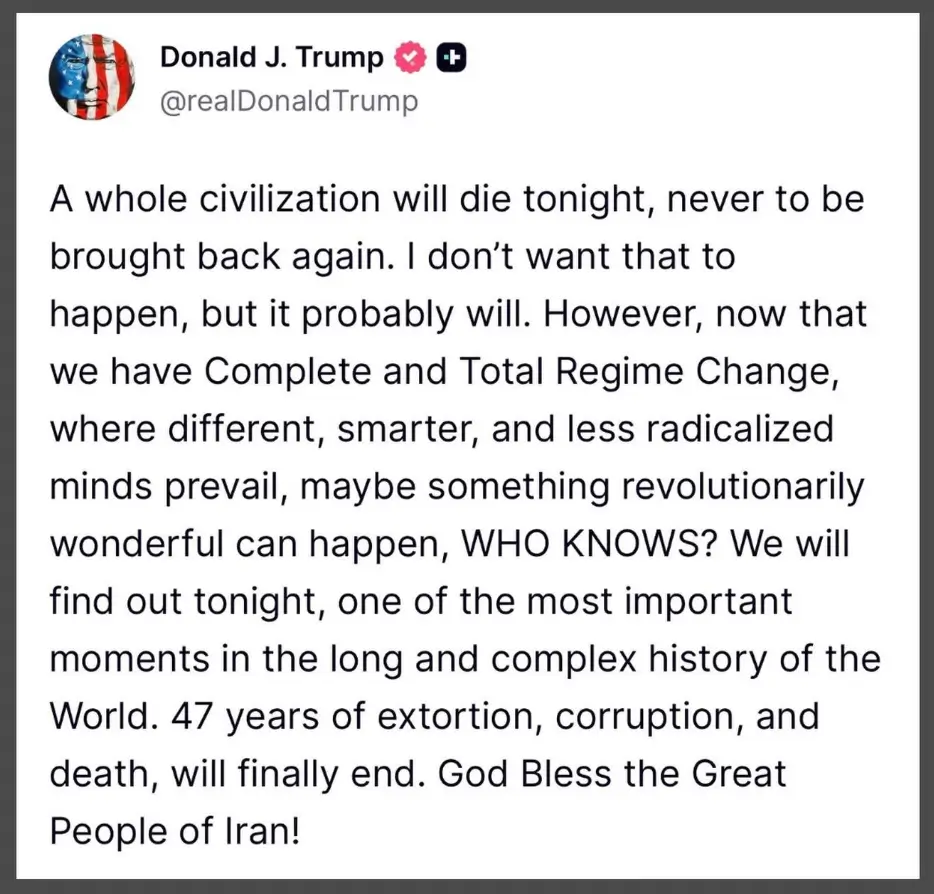
On Easter Sunday, President Trump posted a mocking ultimatum directed at Iran. The language was pointed and provocative, the timing of it all was horrendous to say the least. On the very day the church gathers to proclaim the resurrection of Jesus Christ, our president chose to issue what can only be described as a political taunt on the world stage. The week that followed did not improve. On April 7, President Trump threatened that “a whole civilization will die tonight,” language aimed at Iran that carried the full weight of military ultimatum and the unmistakable rhetoric of civilizational destruction.
At nearly the same time as the Easter post, Franklin Graham was publicly calling believers to pray and rally behind President Trump for re-election. And across the Atlantic, King Charles made statements expressing solidarity with Islam rather than standing in his historic role as head of the Anglican church.
Each of these moments, considered on its own, raises genuine concern. Considered together, they reveal something the church in America has been slow to say clearly: we have allowed our loyalty to Christ to become entangled with our loyalty to political power, and that entanglement is costing us something we cannot afford to lose.
My burden here is not primarily to critique these men. My burden is to ask what these moments reveal about us, about the posture we have adopted as followers of Jesus in a politically saturated culture, and about whether we have quietly drifted from the clarity the gospel demands of us.
The Confusion Christians Must Name
The problem is not that Christians engage politically. The Scriptures are clear that governing authorities are instituted by God, that we are to pray for those in power, and that justice and order in civic life are genuine goods worth pursuing. None of that is in dispute.
The problem is something more subtle, and more dangerous. It is the slow, nearly imperceptible replacement of our ultimate loyalty to Christ with an immediate, emotionally charged loyalty to a political figure. And when that confusion takes root inside the church (meaning the believers), it distorts our witness, dims our moral clarity, and weakens our capacity to speak prophetically into the very culture we are called to serve.
There is a version of Christianity spreading in America right now that has quietly replaced Jesus with political power. The tragedy is that most people inside it do not see it happening.
Political Preference Is Not the Same as Moral Immunity
Here I want to be careful, because I know what many believers are thinking. Many Christians had principled or practical reasons for believing that Donald Trump was a better choice than Kamala Harris or Joe Biden. I understand that position, and I am not here to relitigate the 2024 election or to suggest that all political choices carry the same moral weight. They do not. Reasonable Christians can weigh these things differently, and I respect that.
But here is what must be said plainly: preferring a political leader does not grant him moral or spiritual immunity. Believing someone is the lesser of two evils, or even the genuinely better option, does not mean that everything he says and does must be defended, baptized, or explained away. The measure of a Christian’s moral clarity is not determined by who he voted for. It is determined by whether he remains anchored to the character of Christ when the leader he supports says or does something that falls beneath the standard the gospel demands.
When President Trump threatened that “a whole civilization will die tonight,” that kind of language demands a response from the church. Not a partisan one. Not a political one. A theological one. Because the Christian desire is not the destruction of peoples or civilizations. The Christian desire is truth, justice, restraint, peace where it can be pursued, and moral clarity under Christ. Whatever one believes about the geopolitical situation with Iran, whatever one believes about the necessity of force or the legitimacy of deterrence, the rhetoric of civilizational annihilation is not the language of someone formed by the teaching of Jesus. And Christians who have spent recent years affirming this president’s broader direction cannot simply look away when his words cross a line that the gospel will not cross with him.
By the way, this is not political neutrality, nor is it a retreat into false balance or an implicit defense of the alternatives. This is the prophetic responsibility of the church: to speak with moral clarity in the public square without becoming captive to political power, so that even when we support certain policies or outcomes, we still say plainly when our leaders speak in ways that are incompatible with the character of Christ.
On Peacemaking, Restraint, and the Heart of the Follower of Jesus
Jesus said in Matthew 5:9, “Blessed are the peacemakers, for they shall be called sons of God.” That beatitude is not a political position. It is a description of the heart that belongs to those who have been shaped by the kingdom of God, and it tells us something foundational about what it means to follow Jesus, not merely in temperament or preference, but in the deep orientation of the soul.
To be a peacemaker is not to be naive about the reality of conflict, threat, or evil in the world. Governments bear the sword for a reason. The Scriptures affirm that there are circumstances under which a nation may rightly act, even militarily, to protect its people and preserve order against those who would destroy it. That is not in question here.
What is in question is the spirit in which a follower of Jesus inhabits these realities. We do not celebrate conflict. We do not delight in the language of threat and destruction. We do not speak of whole civilizations dying as though that reflects the heart of the One who wept over Jerusalem. Christians may support necessary and even just uses of military force and still insist that the rhetoric surrounding those actions must be sober, restrained, and worthy of the gravity of human life. The peacemaker does not cheer for annihilation. He grieves it, and holds those who threaten it accountable, even when they sit in the Oval Office.
On the Responsibility of Voices Like Franklin Graham
Franklin Graham occupies a position of enormous influence. He carries a platform built on the credibility of his father’s ministry and the trust of millions of believers who look to him for gospel clarity. That is a stewardship of the highest order, and it demands a corresponding level of care.
Every president who has held the office has been placed there by God. That is true of presidents whose policies we applaud and presidents whose decisions we mourn. But divine sovereignty over human history does not translate into divine endorsement of every particular political figure or agenda. The minister of the gospel must hold that distinction carefully, because when he fails to, the consequences extend far beyond any single election cycle.
When a prominent Christian leader calls believers to pray and rally behind a president’s re-election as though it were a matter of theological urgency, he has, perhaps without fully intending to, made the gospel a function of a political outcome. He has suggested, at least implicitly, that the advancement of the kingdom of God is bound up with the success of a particular candidacy. That is a burden the gospel was never meant to carry. The task of the preacher is to hold high the message Paul describes as the power of God for salvation to everyone who believes. When that message becomes too closely tied to a political moment, it loses the universality that is both its greatest strength and its most essential characteristic.
On King Charles and the Clarity That Office Demands
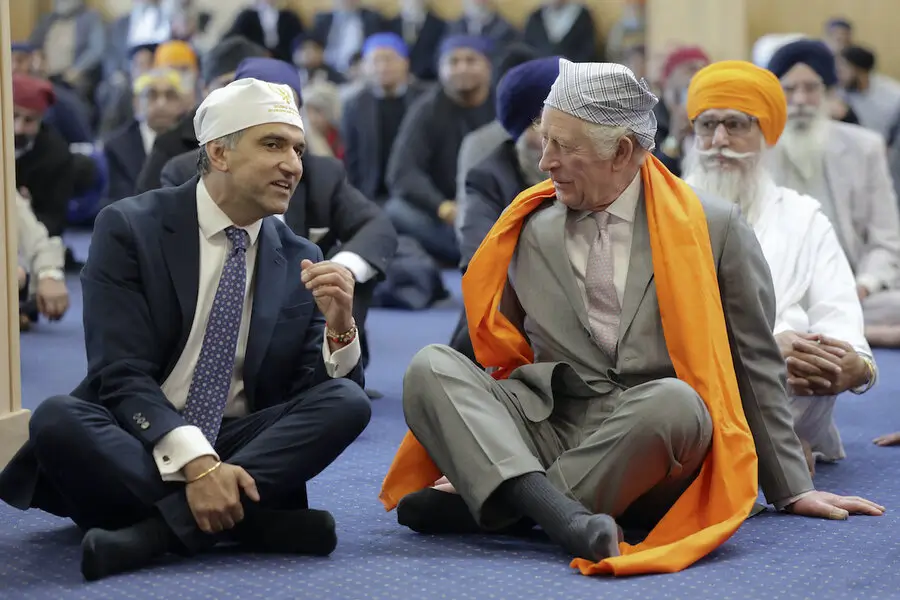 King Charles’s role as head of the Anglican church is not merely ceremonial. It carries with it a responsibility to the tradition he represents and to the theological convictions that tradition has long held. When he publicly expresses solidarity with Islam in a way that obscures the incompatibility between that faith and the claims of Christianity, he does a disservice not only to his office but to the many Anglicans who look to that position for clarity on precisely these kinds of questions.
This is not a matter of hostility toward Muslims as people, toward whom Christians are called to extend genuine love, dignity, and the witness of the gospel. The question is a theological one, and it is not a minor one. Islam and Christianity make contradictory claims about the nature of God, the identity and work of Jesus Christ, and the means by which humanity is reconciled to God. Those contradictions are not resolvable through diplomatic goodwill or careful language. A responsible leader in a Christian tradition must be willing to acknowledge that, not out of cultural arrogance, but out of faithfulness to the truth he has been entrusted to guard.
Confusion about foundational theological realities is not diplomacy. It is abdication.
The Posture the Church Must Recover
The temptation in a moment like this is to swing in the wrong direction, to move from uncritical allegiance to reflexive opposition, from blind loyalty to wholesale rejection. But that is not the answer. The answer is something more demanding, and more distinctly Christian.
The answer is moral clarity. It is the capacity to hold two things at once: genuine appreciation for what a leader does well, and genuine willingness to say when they are wrong. Many believers may have had principled reasons for preferring this president over the alternatives available to them. That is a legitimate judgment. But it must remain a judgment, not a posture of permanent deference. The moment political preference becomes moral immunity, the church has lost something it cannot afford to lose: its prophetic voice.
We can appreciate and still hold accountable. We can respect and still challenge. We can pray for our leaders, as we are commanded to do, without surrendering the moral clarity that our allegiance to Christ demands.
A Word to the Church
The deeper issue is not finally what any of these three men said or did. The deeper issue is what their words and actions reveal about the posture of the church, about the degree to which we have allowed our political identity to shape our Christian identity rather than the other way around.
Our allegiance is to Christ. Not to a party, a candidate, a nation, or a political movement. And that allegiance is not passive. It is not a private conviction we hold while publicly functioning as partisans. It is a commitment that must mark every dimension of how we speak, how we pray, and how we hold power accountable before the watching world.
Pray for your leaders. Pray for peace, not for conflict. Hold those in power to a standard that reflects both the dignity of their office and the weight of the authority they carry. And do not allow your loyalty to any political figure, no matter how much you appreciate what he has accomplished, to crowd out the moral clarity that your loyalty to Christ demands.
The peacemakers shall be called sons of God. That is not a title earned by staying quiet when something is wrong. It is a title carried by those who pursue, with patient conviction and gospel seriousness, the kind of moral faithfulness that reflects the kingdom they are ultimately citizens of.
That is the posture this moment is asking for. And it is the posture the church has always been called to hold.